
More Access, More Confusion
What the Renaissance can teach us about finding clarity when everything is changing at once

Renaissance. Again.
I keep hearing it everywhere. In astrology circles, Uranus entering Gemini. In conversations about AI. In geopolitics. In business. Everyone reaching for the same word to describe what we’re living through.
And they’re not wrong to reach for it.
The world is changing on a different timescale now. Not decades. Not years. Months. What was true last quarter isn’t. Companies that existed last year don’t. Positions people held for decades are gone. We have wars fought with drones. Political power shifting in real time. The ground underneath everything keeps moving.
So yes. Renaissance feels right.
But what history class didn’t cover is what the word actually meant to live through.
Over nearly two centuries, knowledge moved from locked inside monastery walls to available to anyone with access to a printed page. The authority that had organized everything, the Church, the feudal order, the fixed roles people were born into, started losing its grip.
For the merchant class, the scholars, the newly literate, something genuinely new arrived.
The weight of having to choose who to be.
And most of them buckled under it.
And I believe that wasn’t because they weren’t capable. But because access to more had arrived before any internal framework for handling it. They consumed more knowledge hoping clarity would follow volume. They reinvented themselves repeatedly without direction. They grabbed onto the certainty of the past and called it principle. They mistook movement for progress.
What history doesn’t advertise is that the Renaissance’s gifts were real, but narrow. The poor, the majority, were still dealing with plague, war, and survival.
Sounds familiar?
“Should I use Claude or Perplexity” is not a question that a person working in a mine in Africa asks themselves daily. Today we have, once again, the ones that are privileged and the ones that are not. We just don’t talk about it much.
The overwhelming choice, the existential confusion, that was a merchant class problem. A problem that came with enough. Enough access, enough options, enough freedom to suddenly feel completely lost inside it.
Erich Fromm called it the escape from freedom, the tendency to run toward certainty when choice becomes overwhelming.
It sounds dramatic until you look at your own week. How many times did you reach for your phone not because you needed something but because you needed the choosing to stop for a moment? How many times did you fill the silence with content, with noise, with someone else’s opinion about what matters?
That’s what happens when access expands faster than our internal framework for handling it.
It happened in the 15th century. It happened in the 20th. It’s happening now.
If you’re reading this, you’re probably not in survival mode.
You have access. You have options. You might have more than you know what to do with.
Which means the question isn’t whether the gifts of this moment are available to you. It’s whether you’re actually positioned, internally, to receive them.
What I keep coming back to is this:
Give someone endless options without self-awareness and you don’t create freedom. You create paralysis.
Give someone access to knowledge without judgment and you don’t create clarity. You create noise.
The people who moved through the Renaissance well didn’t have more access than everyone else. That was literally the whole disruption, suddenly everyone had more access. What they had was an internal orientation. A way to locate themselves while everything external was shifting. A relationship with themselves stable enough to make decisions from.
That’s still the differentiator. It hasn’t changed.
And this is the uncomfortable part:
No external change resolves internal confusion. Not a new role. Not a new industry. Not a better plan. Not finally getting the strategy right. Because wherever you go, you bring the same patterns with you. The same defaults. The same unexamined reasons behind your choices.
The question that actually matters isn’t what should I do next.
It’s: from what place in me am I making decisions?
So practically, what does that actually look like?
Be intentional with what you let in. The Renaissance had the printing press. We have the internet, social media, and AI producing more content than any human could consume in a lifetime. Not all of it deserves your attention. Curate aggressively. I don’t think that the people who navigated that era well were the ones who read everything, they were the ones who chose carefully what shaped their thinking. For me that looks like limiting my presence only on one social network and reading the news provided by few checked and reliable sources. It changed a lot.
Stay flexible, but make it a practice, not a platitude. The role, the tool, the identity you built around something may look completely different in eighteen months. Flexibility isn’t chaos. It’s something you build deliberately, in small decisions, before the big disruption arrives. My NLP techniques are not something that is nice to have. I use them every time when changes around me leaves me blocked. People do not particularly like change. The bigger the change, the bigger the block. You need to find your own techniques how this blocks will be removed on the way.
Write your thoughts down. Your mind is not a storage system. It is a processing system. When everything stays inside your head it loops, it overwhelms, it convinces you that the noise is thinking. Writing forces you to finish a thought. It creates distance between you and the reaction. It doesn’t matter if it’s a notebook or a notes app, what matters is getting it out of your head and into a form you can actually look at. For me, writing with pen on paper is what works best. My head runs in speed mode most of the time, thoughts layering on top of thoughts before the first one is finished. The physical slowness of writing by hand forces a kind of edit that typing doesn't. By the time something makes it onto the page, it's already been through a filter. What stays is what actually matters. That’s the only reliable way I know to move from mental overload to something resembling clarity.
Finally, the world isn’t slowing down.
But you can become someone who knows how to move inside it.
If you choose to.
Love,
Diana
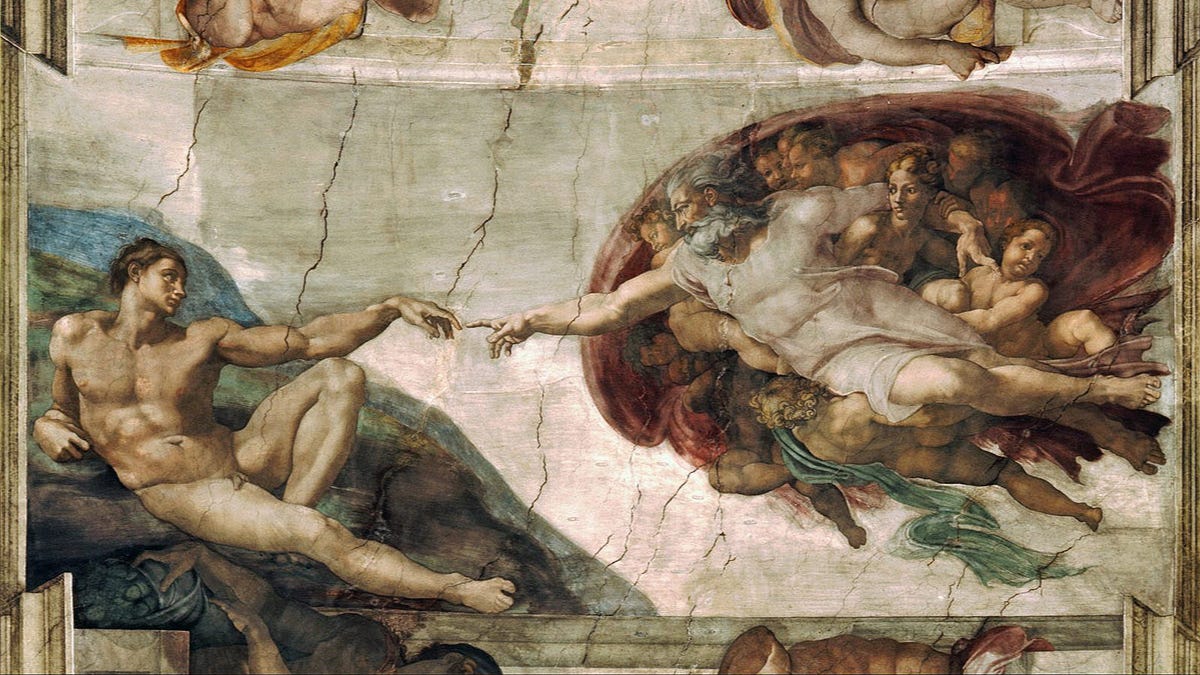
More access without an internal framework just creates more noise. That's the part nobody talks about. The options expand but the defaults don't change.