
The Convenient Lie About HR
Why we've outsourced workplace courage to a single department, and why it's not working

We keep asking the wrong question about workplace investigations.
The question isn’t “Why didn’t HR fix this?” It’s “Why did only HR see it as their job to try?”
I’ve been part of enough disciplinary procedures to see a clear pattern. Witnesses show up nervous, pick their words carefully, and suddenly can’t remember details. They talk about what happened in vague terms, ”things were said” instead of “he said this.” They downplay what they saw, make excuses for behavior that shouldn’t be excused, and usually end with something like “but I don’t want to cause problems.”
I get it. The reasons make sense. Maybe the person being investigated is their boss, someone who decides their projects, their schedule, their next review. Or it’s a coworker they have lunch with every day, whose kid is on the same soccer team as theirs, who helps them out when they need to leave early. Work isn’t just about money. It’s also about relationships, and most people have good instincts for not damaging those relationships.
So witnesses hold back. They give just enough information to say they cooperated, but not enough to actually take a stand. Completely understandable. These are people trying to keep their jobs and their sanity.
What I don’t understand is why we’ve all decided this caution makes perfect sense for everyone except HR.
When an employee stays quiet to protect their relationship with their boss, we call it smart. When HR can’t get that employee to talk, we call it their failure. When someone doesn’t report harassment because they’re scared of the consequences, we nod and say we understand. When HR can’t solve harassment they never heard about, we question whether they’re doing their job.
We’ve created a strange situation where HR is responsible for fixing things, but they have no control over getting the information they need to fix them. They can’t force people to be honest. They can’t make witnesses stop being afraid. They can’t create evidence that people refuse to give them. But somehow, when the investigation goes nowhere, it’s all HR’s fault.
Usually timing is all wrong. Most of the time HR finds out about problems way too late, sometimes months after things started. By the time someone reports it, the situation is already set in stone. Everyone has gotten used to the behavior. Witnesses have already decided what they’re willing to say. The unspoken agreement about “not rocking the boat” is already firmly in place.
HR then has to work backwards, trying to piece together what happened through people who have spent months convincing themselves it wasn’t their job to do anything about it. They’re asking coworkers to be brave now when they weren’t brave when it mattered. That’s not really an investigation, it’s more like trying to solve a crime when all the witnesses have agreed not to cooperate.
And the tools HR has are limited. Sure, they can promise confidentiality, but they can’t make people invisible. In most companies, there are only so many people who could have witnessed something, so it’s not hard to figure out who talked. They can create ways to report safely, but they can’t eliminate what happens socially to people who use them. They can write policies against retaliation, but they can’t stop the subtle ways people get frozen out that don’t technically break any rules.
The sad truth is that sometimes HR is part of the problem. Sometimes they run investigations that are more about protecting the company than finding the truth. Sometimes they do prioritize keeping powerful people happy over holding them accountable. Sometimes they care more about avoiding lawsuits than about actual fairness.
Those failures are real. But what we miss is that we use those examples to assume all HR works this way. This gives us a perfect excuse. We’ve created a story where HR is both too weak to do anything real and too corrupt to be trusted, which means we never have to examine our own inaction.
The biggest challenge in this entire situation is that we imagine HR as independent, like they can make decisions without consequences. But they report to the same executives everyone else does. When an investigation involves a senior leader, HR is often investigating someone more powerful than they are, someone who might have hired them, who controls their budget, who has a say in their performance review.
The nice idea is that HR has special protection to do this work. The reality is that every time they pursue a difficult case, they’re damaging their own career. They make enemies in high places. They become known as “difficult” themselves. Their work relationships suffer the same way everyone else fears theirs will, except we’ve decided that’s just part of their job.
And then there’s the impossible scope of what we expect. We want HR to maintain the culture of an entire organization. That could be dozens, hundreds, maybe thousands of interactions every single day that they’ll never see. Every conversation in every meeting room. Every comment in every hallway. Every message in every chat. Every decision made in every one-on-one.
The bad behavior happens in places HR isn’t, in moments they’ll never witness. But when it adds up to something toxic enough that someone finally reports it, we ask: where was HR?
The answer is simple: exactly where they’ve always been, waiting for someone, anyone, to tell them what’s actually happening.
I think we should name what we’re really doing. We’re handing off our shared responsibility to one department. We’ve set up a nice arrangement where everyone else gets to prioritize their own comfort and safety, knowing that HR will deal with the messy work of holding people accountable.
It works well for almost everyone. Employees avoid conflict. Managers avoid hard conversations with their peers. Executives can delegate the problems. And HR gets to be the company’s conscience, taking on all the risk that comes with that.
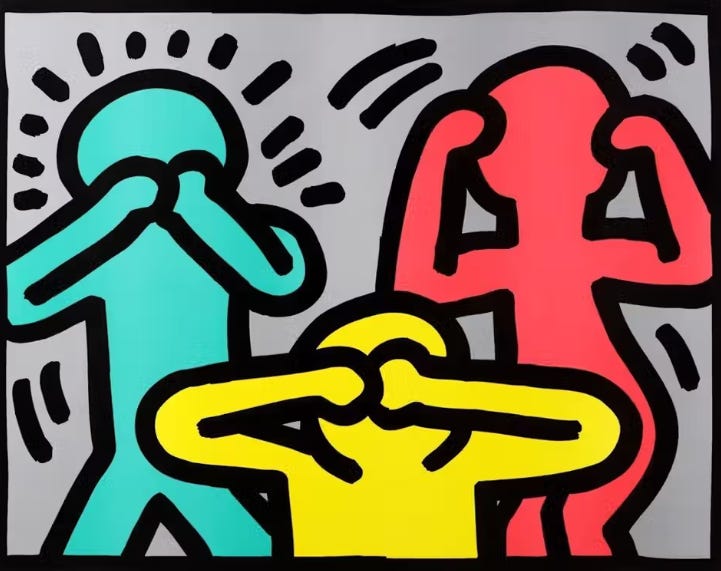
But culture isn’t created by a department, it’s created by everyone, every day, through small choices to speak up or stay quiet. Through whether you laugh at the inappropriate joke or call it out. Through whether you write down the concerning pattern you’re seeing or decide it’s not your place. Through whether you support the coworker being mistreated or keep your head down.
The solution isn’t making HR better, it’s making everyone else step up. We need to recognize that maintaining basic standards at work is everyone’s job, not just HR’s specialized function. When you see something wrong and say nothing, you’re not staying neutral, you’re actively keeping the system exactly as it is.
Yes, this needs structural changes: reporting systems that actually protect people’s identity, real consequences for leaders who create toxic environments, rewards for speaking up instead of subtle punishment for it. We need to look at why speaking up feels so dangerous in the first place.
But we also need to stop pretending that HR’s job is to make up for everyone else’s silence. To stop treating their limitations as failures while treating our own as just how things are. To stop demanding they show courage we’re not willing to show ourselves.
Until that changes, we’ll keep having the same conversation, asking why HR didn’t prevent what dozens of people watched happen and said nothing about.
The answer is simpler than we want to admit: HR can only work with what people tell them.
And most people aren’t telling.
The wounded HR,
Diana
Interesting read. I never thought about these issues from an HR perspective.
In my experience of working in the corporate world, I had unfortunately found HR to bend to the wishes to senior management. I could understand they did so, for the reasons you mentioned. But this also meant that whether people speak up or not, or register their grievances was up to the personality of the top manager in one’s team. Not so much the work culture HR was supposed to build.
What is unfortunate is that in this confusion about where responsibility really lies, I have seen issues being deflected. Like when I raised concerns about a promotion I thought I deserved but didn’t get - my manager said his hands are tied because of HR’s policies, and the HR said they go by the manager’s feedback. Eventually I ended up leaving the company because my ego was hurt. 😅
A worthy marriage allegory.